
From Helplessness to Agency
Hillbilly ElegyThis theme thread traces how family chaos teaches J.D. Vance that choices do not matter, and how mentors and military service help him revise that belief.
increasing Bearing strength in each event
 decreasing
Bearing strength in each eventdecreasingChoices That Seem Powerless

A World Controlled by Others
Adult decisions dominate
Moves, fights, and relationship changes determine where J.D. Vance lives and what his home feels like. As a child, he has little influence over the events shaping his days.
An acquired expectation
Repeated disruption makes effort seem disconnected from outcomes. This is the lived basis of his later understanding of learned helplessness.
The belief is not an abstract attitude; it grows from a childhood in which many important choices are genuinely beyond his control.
A Small Academic Investment

Someone Expects Results
A costly calculator
Mamaw spends money she cannot spare on a graphing calculator for J.D. Vance’s advanced mathematics class. The gift tells him that she expects him to use his ability.
Effort becomes visible
He studies more seriously because the investment gives him something concrete to honor. School begins to feel less like a distant demand and more like a choice he can act on.
Support makes agency possible without pretending that circumstances no longer matter.
Boot Camp Evidence
Discovering Capacity
Challenges accumulate
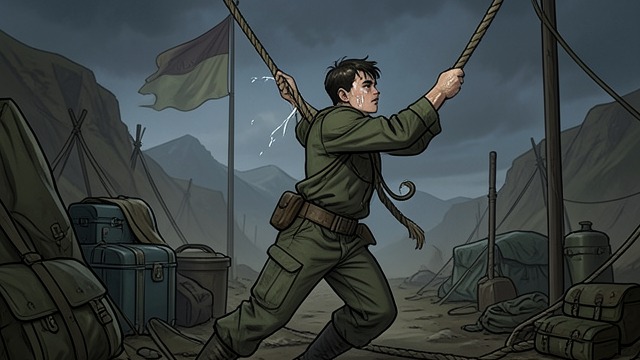
J.D. Vance runs, climbs ropes, and learns skills he once considered impossible. Repeated success changes his estimate of what effort can accomplish.
A changed belief
The Marines teach him learned willfulness in place of learned helplessness. He begins to expect that practice and persistence can affect outcomes.
The lesson comes through experience, not a slogan, and becomes available to him in later decisions.
Failure With Another Chance

Responsibility Without Perfection
A demanding assignment
J.D. Vance makes mistakes while serving as a media-relations officer. His supervisors correct him rather than treating early failure as proof he cannot do the job.
Competence grows
He improves his communication and management, eventually earning a commendation for his work. The experience teaches that failure can be part of learning rather than a final verdict.
A second chance expands his sense of what he can responsibly attempt.
Agency in the Community
Beyond Blame
A wider diagnosis
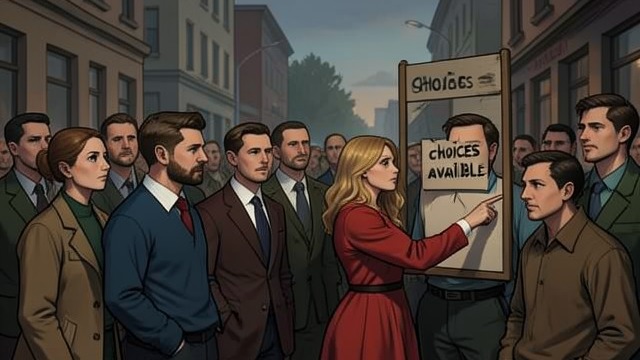
J.D. Vance argues that many working-class neighbors have come to believe that their choices cannot change their circumstances. That belief can deepen withdrawal and resentment.
Responsibility with context
He does not claim that every obstacle is self-made. Instead, he asks people and communities to recognize the choices still available and to support those at the margins.
Agency becomes both personal practice and a collective responsibility to create conditions in which effort can matter.
during J.D. Vance’s childhood
during junior year of high school
during Marine Corps boot camp
during his Marine Corps service
during adulthood and the book’s conclusion
